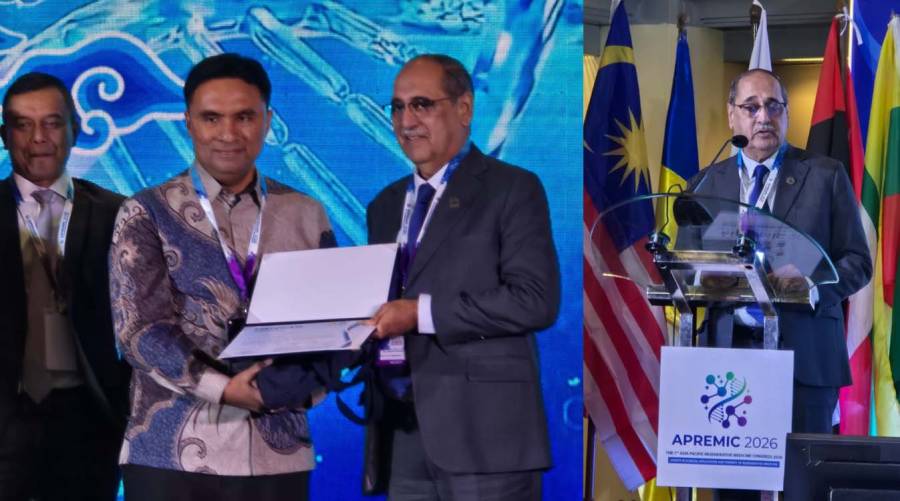
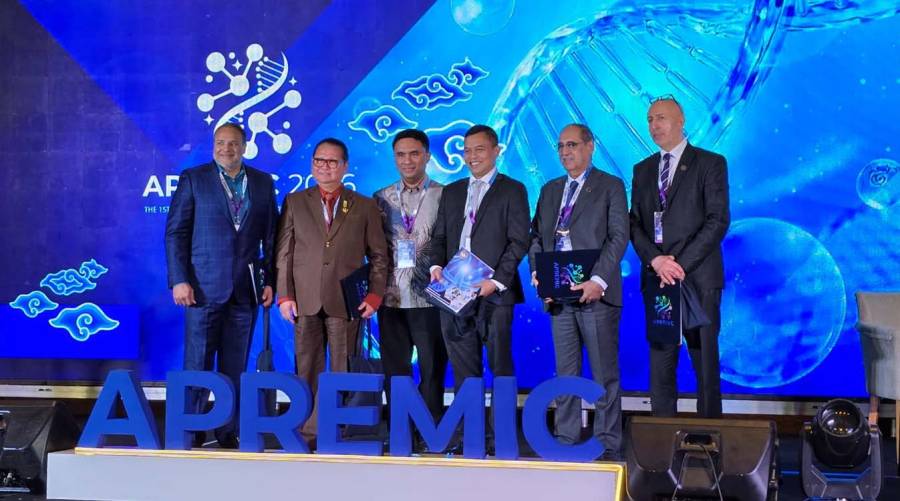
KARACHI: Pakistani orthopedic and regenerative medicine specialist Prof. Dr. Khalid Mahmud Shah has received the Diplomate of the American Board of Longevity Medicine (ABLM) during the Asia Pacific Regenerative Medicine Congress (APREMIC 2026) held in Jakarta, Indonesia, earlier this month.
The recognition adds another international credential to the Karachi-based physician’s professional profile and reflects Pakistan’s growing engagement with the rapidly evolving fields of longevity, healthy ageing and regenerative medicine.
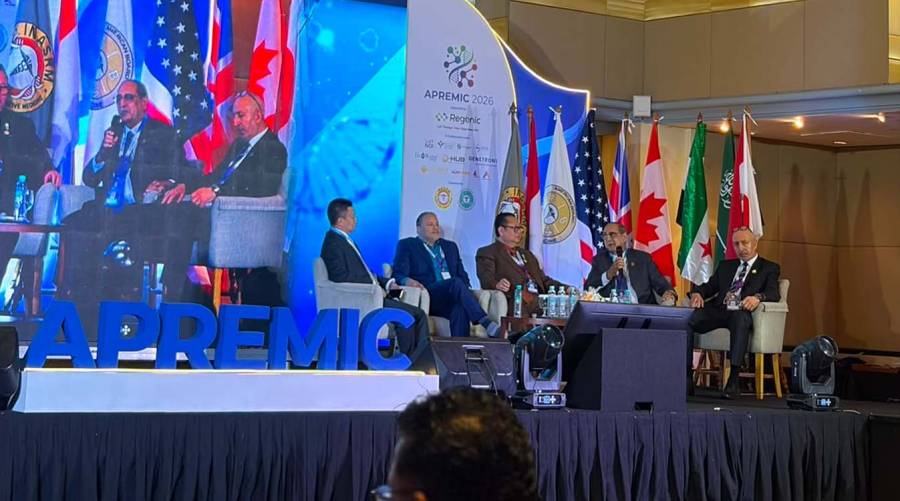
The award ceremony took place during recently held APREMIC 2026, a regional scientific congress that brings together physicians, researchers and healthcare professionals working in regenerative medicine, anti-ageing science, stem-cell research and related disciplines.
What is the Diplomate of the American Board of Longevity Medicine?
A Diplomate designation is a board certification or professional credential awarded by a professional certifying board to physicians who meet its educational, training and examination requirements.
In this case, the American Board of Longevity Medicine certifies physicians who have demonstrated knowledge in longevity medicine—an emerging field that focuses on promoting healthy ageing, preventing age-related diseases, extending healthspan and applying evidence-based strategies aimed at improving long-term health.
The credential reflects professional certification in this area but should not be interpreted as creating a new government-recognised medical specialty.
What is longevity medicine?
Longevity medicine is an expanding multidisciplinary field that seeks to help people remain healthier for longer by identifying disease risks earlier and promoting evidence-based preventive care.
Rather than focusing solely on treating disease after it develops, longevity medicine combines preventive medicine, lifestyle interventions, nutrition, exercise science, metabolic health, precision medicine and, where supported by scientific evidence, regenerative medicine approaches to improve quality of life as people age.
Researchers worldwide continue to investigate how advances in diagnostics, biomarkers and regenerative therapies may contribute to healthier ageing, although many interventions remain under active scientific evaluation.
Why APREMIC matters
The Asia Pacific Regenerative Medicine Congress (APREMIC) is among the regional scientific meetings dedicated to regenerative medicine and translational healthcare research.
The congress provides a platform for clinicians, researchers and industry experts to exchange scientific findings, discuss emerging technologies and explore developments in stem-cell science, tissue engineering, biologics, longevity medicine and regenerative therapies.
Recognition at such international scientific gatherings highlights increasing participation by Pakistani clinicians in global academic and professional networks.
Dr. Khalid Mahmud Shah's work in Pakistan
Prof. Dr. Khalid Mahmud Shah is an orthopedic surgeon based in Karachi with decades of experience in musculoskeletal disorders, arthroscopy and regenerative medicine.
He is associated with AlKhaleej OrthoStem, which earlier this year became an affiliate and examination centre of the American Board of Regenerative Medicine (ABRM)—another milestone aimed at strengthening internationally aligned education and collaboration in regenerative healthcare in Pakistan.
According to publicly available professional information, Dr. Shah has completed advanced training in orthopedics, biomechanics and arthroscopy from institutions in the United Kingdom, Japan and Singapore, and has increasingly focused his work on regenerative and longevity-oriented approaches alongside orthopedic practice.
Growing interest in longevity medicine
Interest in longevity medicine has expanded globally as populations age and healthcare systems increasingly shift from disease treatment toward disease prevention and healthy ageing.
Medical researchers are investigating how personalized prevention, metabolic optimization, exercise, nutrition and regenerative medicine may help reduce the burden of age-related illnesses while extending the number of years people live in good health.
Although many concepts within longevity medicine continue to evolve, experts emphasize that clinical decisions should remain grounded in robust scientific evidence and established medical guidelines.
Why this recognition matters
For Pakistan, international professional recognition of physicians working in emerging healthcare disciplines reflects the country’s expanding participation in global medical education and scientific collaboration.
While the Diplomate credential does not itself represent a new medical treatment or clinical breakthrough, it highlights the increasing involvement of Pakistani healthcare professionals in internationally recognized educational pathways focused on healthy ageing and regenerative medicine.
As longevity medicine continues to develop, such achievements may encourage greater research collaboration, professional training and academic engagement between Pakistani clinicians and international medical communities.